Nedre Dalälven River Landscape

The Nedre Dalälven area has a varied landscape with a wide range of ecosystems linked to local habitats. These include a large river with bays, lakes, tributaries, waterways, rapids, ravines, microhabitats in farmland, river meadows, shore grasslands, productive forest lands, old-growth forest, freshwater swamp forest, broadleaf deciduous forest and grazing lands. The Nedre Dalälven lies in the borderland between the European broadleaf deciduous forest region, with a large proportion of hardwood trees, and the northern coniferous forest region.
Ecological Characteristics

A large part of the core area consists of Färnebofjärden National Park, known for its great biodiversity. The vegetation differs widely across the park. The south features coniferous forests and marshes with a northern character. The north has richer vegetation with a large proportion of hardwood trees, primarily oak and lime. The fauna is diverse, and Färnebofjärden is known for its rich birdlife.
 
The Nedre Dalälven is located in the border areas of the counties of Dalarna, Västmanland, Uppsala and Gävleborg, and encompasses rural parts of nine municipalities. 
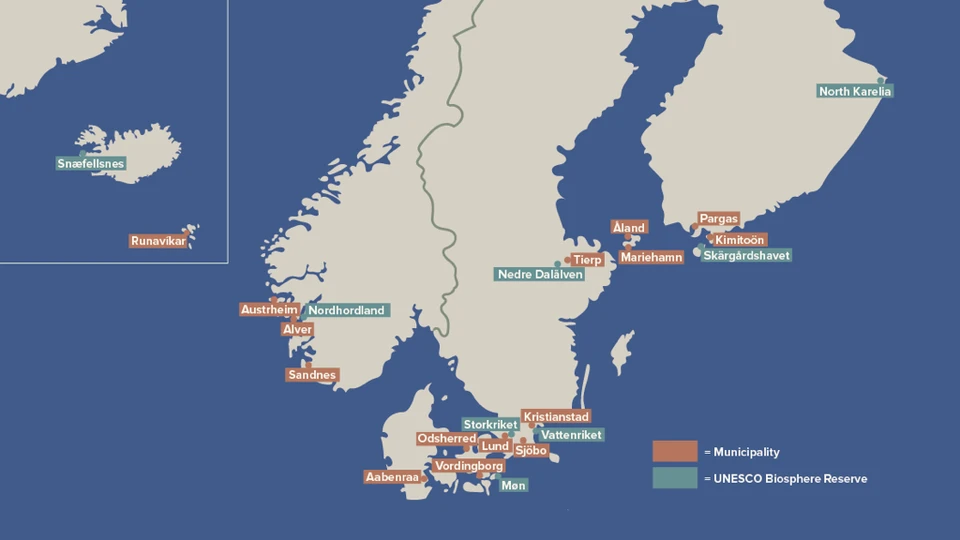
Map of the Nordic Nature Network
Over a hundred species of birds regularly breed here, including all seven Swedish woodpecker species, Ural owl, osprey and whooper swan. Mammals include strong populations of elk, roe deer, hare and marten. Other mammals found in the area include lynx, beaver, otter and bear. Wolf and wolverine pass through the area. Several rare and threatened insect species live in dead and dying trees, including the cinnabar-red flat bark beetle (Cucujus cinnaberinus), Ceruchus chrysomelinus, the hairy pine borer (Tragosoma depsarium) and Acanthocinus griseus.
 

Socio-Economics Characteristics

The local business sector is characterised by industrial activity based on long-standing tradition and natural access to forest, ore and running water. There are still world-leading steel mills in Avesta, Långshyttan, Vikmanshyttan and Söderfors. Forestry and the forest industry, as well as iron and steel, are the most important basic industries in the region. The forest as a raw material has led to the establishment of sawmills and the pulp, cardboard and paper industry, and it was also one of the basic conditions for the mining industry. Agriculture continues to be a key industry in the southern parts of the region, where it links with the flatlands of the Lake Mälaren valley and with areas along the river in southern Dalarna. The landscape values and the location of the region promote tourism. For many years the region has pursued sustainable development efforts, including several development projects.

Key Data

Country: Sweden
Area: Approx. 7,399 km²
Population: Approx. 121,559 inhabitants