Storkriket

In southern Sweden, Storkriket Biosphere Reserve spans some of the country’s most species-rich landscapes. Its mosaic of farmland, forests, wetlands, lakes, grasslands, and historic towns supports an exceptional concentration of biodiversity — with 15,600 recorded species, including 22% of Sweden’s nationally red-listed species, within only 0.25% of the nation’s land area. Shaped by centuries of human stewardship and unique geology, Storkriket is both an ecological hotspot and a dynamic cultural landscape.
Ecological Characteristics

The biosphere reserve encompasses a diverse range of habitats, including wetlands, lakes, forests, agricultural land, grasslands, coastal zones, and urban green spaces. These environments support approximately 15,600 recorded species, among them the Scandinavian red deer (Cervus elaphus elaphus), hooded sunburst lichen (Xanthomendoza fallax), golden-gilled bolete (Phylloporus pelletieri), Batavian sand bee (Andrena batava), and common spadefoot (Pelobates fuscus).
 
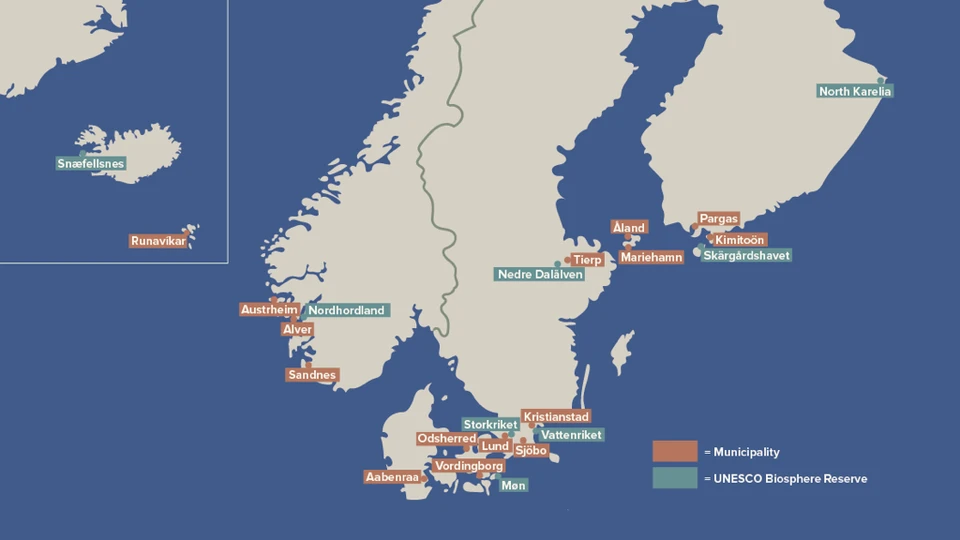
Map of the Nordic Nature Network
The reserve is home to 18 of Sweden’s 19 bat species, while its wetlands and lakes serve as crucial breeding grounds for amphibians and waterfowl. The white stork (Ciconia ciconia), once extinct in Sweden, has been successfully reintroduced to the area, and today around 50 nesting pairs thrive within the reserve.The region also harbors a remarkable diversity of mosses, lichens, and fungi, many of which are nationally rare and protected. Its ecosystems provide essential services such as water filtration, carbon storage, pollination, and food production, making it one of Sweden’s most important reservoirs of biodiversity.
 

Socio-Economics Characteristics

Most of the biosphere reserve's inhabitants live in the historic city of Lund. The region blends urban vitality with agricultural productivity, equestrian traditions, and a rich cultural heritage. Farming families and equestrian communities in Skåne draw on centuries of knowledge of wetland management, agroforestry, and land stewardship. The economy is characterized by a mix of agriculture, education, innovation, and outdoor recreation, reflecting a long-standing integration of cultural practices with landscape management.

Key Data

Country: Sweden
Area: Approx. 1,108 km²
Population: Approx. 154,342 inhabitants