Vestvågøy Municipality

Vestvågøy Municipality is located in Nordland County in northern Norway and forms part of the Lofoten archipelago. The municipality includes the island of Vestvågøya as well as several smaller surrounding islands, with Leknes as the administrative and commercial centre.

Vestvågøy holds a central position in the region. The municipality combines distinctive coastal and mountain landscapes with lowland areas that support settlement and economic activity. Vestvågøy also has a long cultural history dating back to the Viking Age, when the island was known as Lofotr. Today, the municipality has a diverse economy including agriculture, fisheries, aquaculture and tourism.
Ecological Characteristics

Vestvågøy is defined by a varied landscape with mountains, open coastlines, sandy beaches and lowland agricultural areas. Compared to other parts of Lofoten, the municipality has relatively extensive flat areas, supporting both farming and settlement.

The surrounding marine environments are highly productive and form part of the rich ecosystems of the Lofoten region. Coastal habitats, shallow waters and kelp forests support important fish stocks and seabird populations. The combination of marine and terrestrial ecosystems, alongside long-standing land use practices, contributes to a diverse and dynamic natural environment.

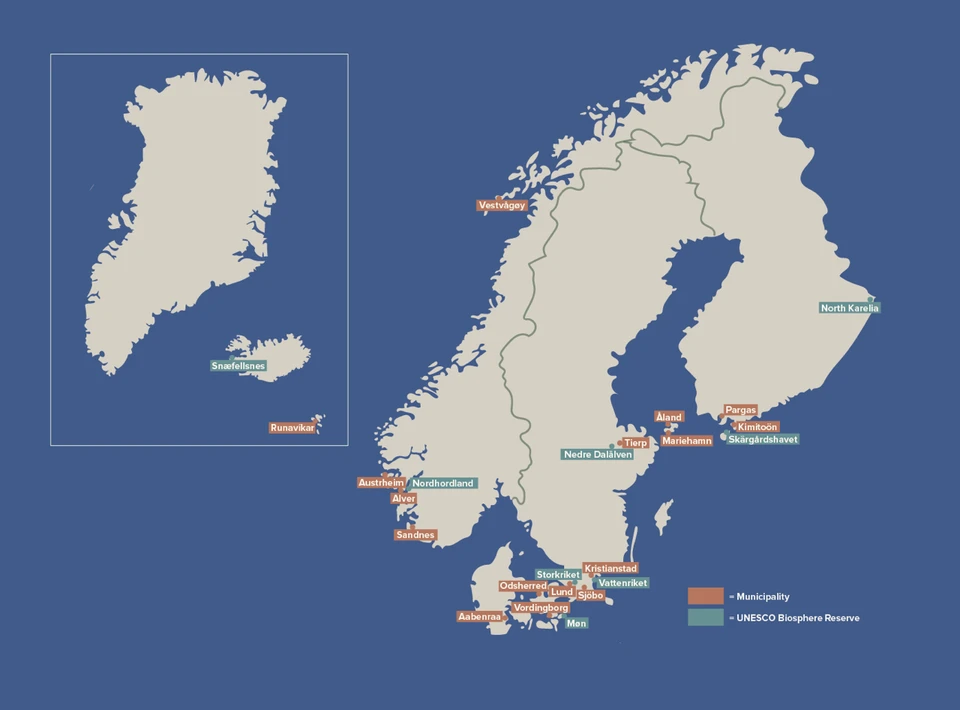
Map showing the municipalities and Biosphere reserves participating in the network to date

Socio-Economics Characteristics

Vestvågøy has a population of just over 11,000 inhabitants, distributed across several villages and local communities, with Leknes as the main centre. Norwegian is the primary language spoken.

The municipality has a broad economic base. Agriculture plays a significant role, particularly livestock farming and grass production. Fisheries and aquaculture are central industries, and tourism has grown in importance. Cultural heritage, including Viking history and coastal traditions, remains an important part of local identity.

Vestvågøy combines access to services, infrastructure and education with proximity to nature. Seasonal variations in population occur due to tourism and second-home use. Balancing economic development, community life and environmental sustainability is a key focus for the municipality.

Key Data

Country: Norway
Area: Approx. 425 km²
Population: Approx. 11,500 inhabitants
Largest city: Leknes